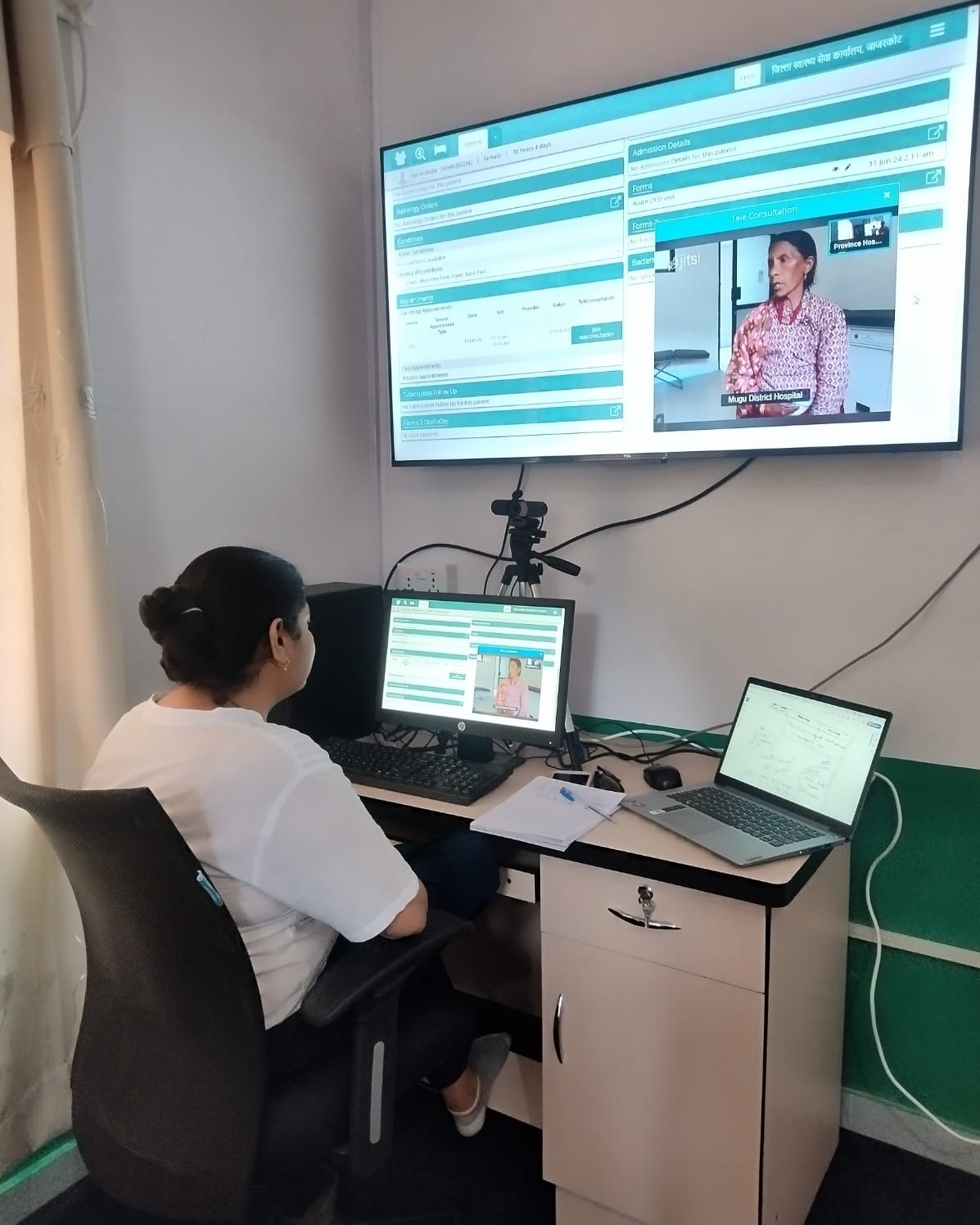
In Nepal’s remote Karnali region, accessing healthcare has long been a daily struggle. Rugged terrain, limited road access, and scarce medical facilities often force families to walk for days—or spend money they do not have—to reach hospitals in distant cities. Today, telemedicine is changing that reality, bringing specialist care closer to communities that were once cut off from essential health services.
Seven-year-old Hima Lama from Mugum Karmarong Rural Municipality in Mugu is one such example. She had been suffering from a persistent skin condition for a long time. Her family walked for three days to reach the district hospital. Through telemedicine, doctors at the hospital were able to consult a specialist at Karnali Provincial Hospital in Surkhet via video call. Following the specialist’s guidance, Hima received treatment locally and recovered fully within a week.
Similarly, 11-year-old Abhishek Singh from Humla was brought to the district hospital after developing fever and cough. Instead of being referred outside the district, doctors consulted specialists in Surkhet through live video communication. With proper medication and monitoring, his condition improved, sparing his family the hardship and expense of long-distance travel.
Stories like these are becoming increasingly common across Karnali. In the past, patients often had no choice but to travel to Surkhet, Nepalgunj, Kathmandu, or even across the border to India for specialist treatment. For many families, such journeys were financially and physically impossible.
Today, telemedicine services are operating in district hospitals across Mugu, Humla, Dolpa, Jajarkot, and Kalikot, as well as selected health posts in Mugu. While people in these districts still walk long hours to reach the nearest health facility, access to specialist consultation has significantly improved.
The impact has been particularly strong for patients with skin conditions, mental health concerns, head injuries, eye problems, and maternal and child health needs. Through real-time video consultations, local doctors are able to receive expert advice, make informed treatment decisions, and manage cases that previously required referrals.
One such beneficiary is Yubaraj Thapa, a young man from Dolpa, who had been living with mental illness for years without access to treatment. Through telemedicine, he is now receiving regular consultations from a mental health specialist. For his family, the service has brought both relief and renewed hope.
Launched in April 2025, in partnership with the Karnali Province Ministry of Social Development and supported by Chay Ya Nepal, the telemedicine program has already served more than 1,400 patients across Karnali. The initiative not only reduces financial and physical burdens on families but also strengthens local health systems by connecting frontline health workers with specialist doctors.
For communities once isolated by distance and terrain, telemedicine has become more than a health service—it is a lifeline. By ensuring that quality healthcare reaches even the most remote corners of Nepal, this initiative reflects Chay Ya Nepal’s commitment to equity, dignity, and the belief that no community is too remote to receive care.
📰 Read more about this initiative in national media:
Jhilko Khabar
The Annapurna Express
Photo Gallery