
Small Budget, Big Change: How Repairs Improved WASH in Schools
In the southern districts of Bara and Rautahat in Nepal’s Madhesh Province, 22 public schools have taken big steps toward becoming healthier and more inclusive learning spaces. Through a collaborative project between Chay-Ya Nepal, UNICEF Nepal, and local governments, students now have access to better sanitation, hygiene, and drinking water facilities—without needing to build everything new from scratch.
Instead of starting over with expensive new infrastructure, the project focused on repairing and improving what already existed. This approach was not only practical, but also highly cost-effective. According to Chay-Ya Nepal’s Executive Director Kamal Thapa, repairing existing WASH (Water, Sanitation and Hygiene) facilities proved to be nearly three times more affordable than new construction.
“In Nepal, we often assume that broken toilets or damaged water taps must be replaced completely,” said Thapa. “But this project shows that with thoughtful repair and local involvement, we can achieve high-quality results with fewer resources.”
Low Investment, High Impact
With a total investment of NPR 24.6 million, the program supported 22 community schools. Of that, NPR 10.9 million went into capacity development—including teacher training, student awareness, and hygiene clubs—while NPR 13.6 million was used for infrastructure repair and upgrades. Each school received around NPR 600,000 in support.
That amount may seem small, but the improvements were significant. The repaired facilities now include:
• Clean and child-friendly toilets
• Urinals designed for children’s height
• Disability-accessible toilet units
• Handwashing stations with running water
• Menstrual hygiene disposal facilities (incinerators)
• Safe drinking water systems
Many of these schools had structures in place, but they were not functioning properly. By upgrading and repairing rather than replacing, the program reached more than double the number of schools that a new-construction-only model could have supported.
Local Ownership and Inclusion
One of the key strengths of the project was community participation. Local municipalities contributed 12.14% of the total cost, while schools and communities also made in-kind and financial contributions. This joint effort has encouraged long-term ownership and sustainability.
Special attention was also given to making the schools inclusive. Facilities were designed to be accessible for students with disabilities, and menstrual hygiene support helped ensure a safer, more dignified environment for adolescent girls.
Measurable Outcomes
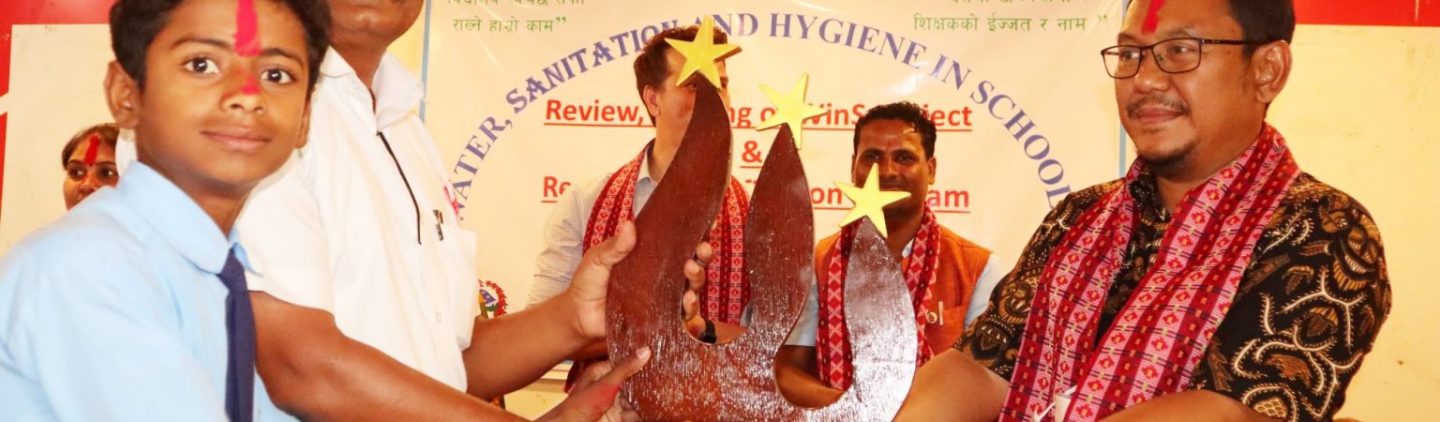
Originally, the project aimed to help 9 schools reach the “Three-Star” WASH standard. However, by the end, 13 schools had achieved this target, and the remaining 9 had reached the two-star level.
In total, the project benefited 11,190 people, including 5,930 women, 5,210 men, and 28 individuals with disabilities.
Learning from the Mountains, Applied in the Plains
Chay-Ya Nepal has worked in remote districts like Mugu, Humla, and Dolpa since 2018. Lessons from these regions helped shape the strategy in Madhesh. While inclusive toilets were harder to build in the hills due to steep terrain, the flat land in Bara and Rautahat made such infrastructure easier to implement.
This project proves that big impact doesn’t always require big spending. By using existing resources wisely and involving the local community, real, lasting change is possible.